What Happens If You Fail NPPE: A Guide for Canadian Engineers
Quick Answer
Failing the NPPE exam can feel stressful, but it’s not the end of your journey to becoming a licensed Professional Engineer in Canada. Understanding what happens if you fail the NPPE exam in Canada, the consequences, and your options for reattempt can help you recover, learn, and come back stronger. By following NPPE exam reattempt guidelines for Canadian engineers and practical recovery strategies, you can turn a failed attempt into a stepping stone toward success.
Understanding NPPE Exam Failure
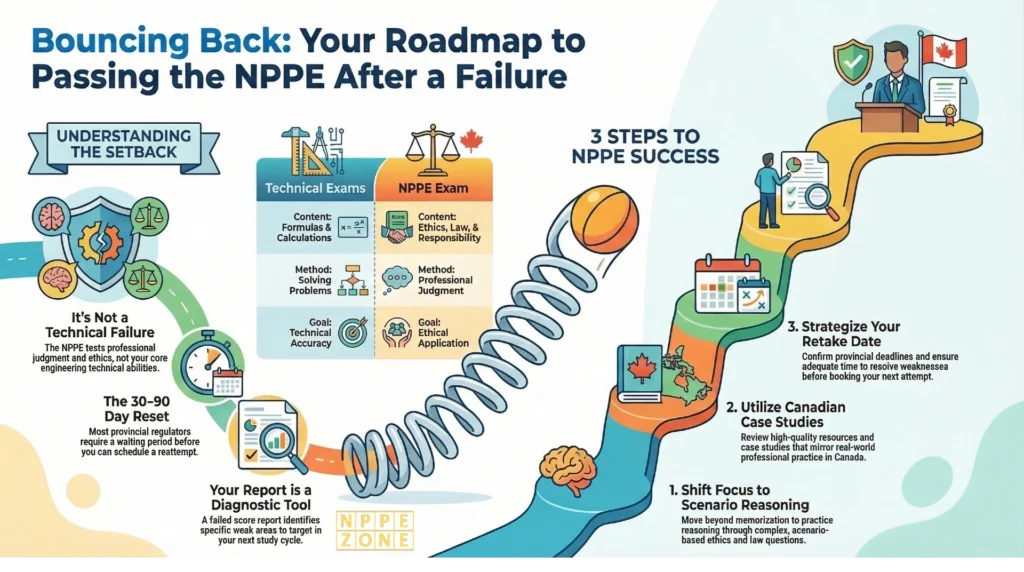
The NPPE tests your knowledge of engineering ethics, Canadian engineering law, and professional responsibility. Unlike technical exams, it’s scenario-based, which can make it challenging if you’re not used to applying theory to practical situations. Failing the NPPE exam doesn’t reflect on your technical abilities—it simply shows that more preparation is needed in applying ethical principles and professional judgment.
Consequences of NPPE Exam Failure
- You must retake the NPPE exam if you fail, following the rules and timeframes set by your provincial engineering regulatory body.
- A failed attempt may delay your path to licensure, depending on your province’s retake schedule.
- Your score report may indicate weak areas, helping you target your next study plan.
Understanding NPPE exam failure consequences for engineers helps reduce stress and clarify your next steps.
Can You Retake the NPPE Exam If You Fail?
Yes! The NPPE exam retake policy after failing allows candidates to schedule a new attempt, typically after a waiting period (often 30 to 90 days, depending on your provincial engineering regulator).
Before retaking, make sure to:
- Review NPPE exam failure rules and regulations Canada.
- Analyze your performance to identify weak areas.
- Use structured study strategies to strengthen understanding of ethics, law, and professional practice.
Knowing how to recover from failing the NPPE exam is critical for turning failure into a learning opportunity.v
Steps to Take If You Fail the NPPE Exam
Failing an exam can feel disheartening, but a clear plan can make your second attempt much more successful. Here are steps to take if you fail the NPPE exam:
1. Review Your Exam Report
- Examine your score report for areas where you lost points.
- Pay attention to recurring topics in ethics, law, or professional responsibility.
2. Update Your Study Plan
- Create a targeted study schedule based on failing NPPE exam tips and next step strategies.
- Focus on scenario-based questions that challenge your professional judgment.
3. Use High-Quality Resources
- Review NPPE study notes, summaries, and practice exams.
- Study Canadian case studies that mirror the types of questions on the NPPE.
4. Practice Scenario-Based Questions
- Working with NPPE exam reattempt guidelines for Canadian engineers, simulate exam conditions to build confidence.
- Focus on reasoning through situations instead of memorizing answers.
5. Schedule Your Retake Strategically
- Confirm your provincial deadlines and available NPPE exam retake policy after failing dates.
- Ensure you have adequate time to revise weak areas before your next attempt.
How to Recover From Failing the NPPE Exam
Recovering successfully requires a combination of structured preparation, reflection, and practice. Here’s a step-by-step approach:
- Identify Weaknesses: Use your failed attempt to spot topics needing improvement.
- Targeted Study: Focus on ethics, Canadian engineering law, and professional responsibility.
- Scenario-Based Practice: Solve practice questions and case studies similar to real NPPE exams.
- Review and Repeat: Revisit challenging areas daily until confident.
- Track Progress: Monitor improvement with practice tests to ensure readiness.
Following what to do after failing the NPPE exam ensures that you approach the next attempt with confidence and a clear roadmap.
Turning NPPE Exam Failure Into a Growth Opportunity
Failing the NPPE exam doesn’t have to be a setback. By taking steps to take if you fail the NPPE exam, you can transform the experience into a powerful learning opportunity. Here’s how leveraging your first attempt can benefit your preparation and career:
- Focused Improvement on Weak Areas – Reviewing your results and following NPPE exam reattempt guidelines for Canadian engineers allows you to identify exactly which ethics, law, or professional responsibility topics need more attention. This targeted approach ensures your next attempt is more effective.
- Strengthened Problem-Solving Skills – Working through failed questions teaches you how to reason through complex, scenario-based situations. Applying these lessons from failing NPPE exam tips and next step strategies improves your ability to handle future professional challenges beyond the exam.
- Boosted Exam Confidence – Knowing that you’ve analyzed your mistakes and followed a structured recovery plan reduces anxiety. By practicing with real-world examples and how to recover from failing the NPPE exam, you enter the exam with renewed confidence.
- Efficient Retake Preparation – Using your initial attempt as a diagnostic tool, you can streamline your study plan. Following the NPPE exam retake policy after failing ensures you maximize your review time without unnecessary repetition, making your preparation smarter, not harder.
- Professional Growth and Resilience – Facing a temporary setback reinforces resilience and commitment to licensure. Learning from failure demonstrates the very qualities that the NPPE measures: ethical judgment, professionalism, and the ability to navigate complex decisions.
By incorporating these steps and using NPPE exam failure rules and regulations Canada as a framework, failing your NPPE exam becomes less about a misstep and more about building a stronger foundation for licensure and future professional practice.
FAQ: What Happens If You Fail NPPE
Can I retake the NPPE if I fail?
Yes. Most provinces allow retakes after a waiting period. Follow NPPE exam reattempt guidelines for Canadian engineers.
What should I do after failing the NPPE exam?
Review your results, identify weak areas, create a focused study plan, and practice scenario-based questions.
Are there consequences for failing the NPPE?
Delays in licensing are the main consequence. There are no penalties beyond needing to retake the exam.
How can I recover from failing the NPPE exam?
Target weak areas, use structured NPPE study materials, practice realistic scenarios, and follow a disciplined study plan.
Can I pass on my second attempt?
Absolutely. Using failing NPPE exam tips and next step strategies, most candidates pass their second attempt with focused preparation.
Final Thoughts
Failing the NPPE exam is a challenge, but it’s also an opportunity to strengthen your knowledge, refine your professional judgment, and build exam confidence. By understanding what happens if you fail the NPPE exam in Canada, following the NPPE exam retake policy after failing, and applying structured recovery steps, you can approach your next attempt smarter and more prepared.
With a disciplined study plan, scenario-based practice, and a focus on ethics, law, and professional responsibility, you can turn a temporary setback into long-term success—and get one step closer to becoming a licensed engineer in Canada.