Canadian Engineering Law for NPPE: What You Need to Know to Pass the Exam
Introduction
If you’re preparing for the NPPE exam in Canada, understanding Canadian engineering law for NPPE is just as important as ethics and professional practice. Many candidates focus heavily on memorization, but the exam often tests your ability to apply legal principles to real-world engineering scenarios.
When I first started reviewing NPPE materials, I realized that Canadian law wasn’t about memorizing statutes word-for-word—it was more about understanding how legal concepts influence engineering decisions, responsibilities, and liability. That shift in mindset made the material much easier to grasp.
In this guide, we’ll break down Canadian engineering law topics for the NPPE exam explained, including key concepts like contract law, negligence, professional regulation, and how these topics show up in exam questions.
Canadian Engineering Law for NPPE: What It Includes in Practice
Canadian engineering law for NPPE covers the legal framework that governs engineering practice in Canada, including contract law, tort law, negligence, liability, and professional regulation. It is closely tied to NPPE Canadian law concepts engineers need to know, and is designed to evaluate how well candidates can apply legal reasoning in real-world engineering scenarios.
When studying Canadian engineering law topics for the NPPE exam explained, it’s important to recognize that the exam does not test isolated legal definitions. Instead, it focuses on applied understanding of contract law in Canadian engineering NPPE explained, negligence and liability in Canadian engineering law NPPE, and professional regulation laws for engineers in Canada NPPE.
This means candidates must be able to interpret scenarios, identify the relevant legal principle, and determine the correct professional response based on essential Canadian legal principles for NPPE exam success.
Canadian Engineering Law for NPPE: Core Overview
Canadian engineering law for NPPE refers to the body of legal principles that govern how engineers in Canada are expected to practice within contractual, regulatory, and liability frameworks. It combines elements of contract law in Canadian engineering NPPE explained, negligence and liability in Canadian engineering law NPPE, and professional regulation laws for engineers in Canada NPPE.
Understanding Canadian engineering law for NPPE is essential because exam questions often test how these legal principles apply in real-world engineering scenarios rather than testing definitions alone. Candidates are expected to interpret situations involving duty of care, breach of contract, and professional responsibility.
By mastering Canadian engineering law topics for the NPPE exam explained, engineers can confidently analyze case-based questions and apply NPPE Canadian law concepts engineers need to know in a structured and logical way.
Key Canadian Engineering Laws for NPPE Preparation
The NPPE doesn’t expect you to be a lawyer, but it does expect you to understand the essential Canadian legal principles for NPPE exam success. Some of the most important areas include:
- Contract law
- Tort law (especially negligence)
- Professional regulation
- Duty of care
- Liability and responsibility
These topics form the backbone of NPPE Canadian law concepts engineers need to know and are frequently tested through scenario-based questions.
Contract Law in Canadian Engineering NPPE Explained
What is Contract Law?
Contract law in Canadian engineering NPPE explained refers to agreements between parties—typically engineers, clients, contractors, or employers.
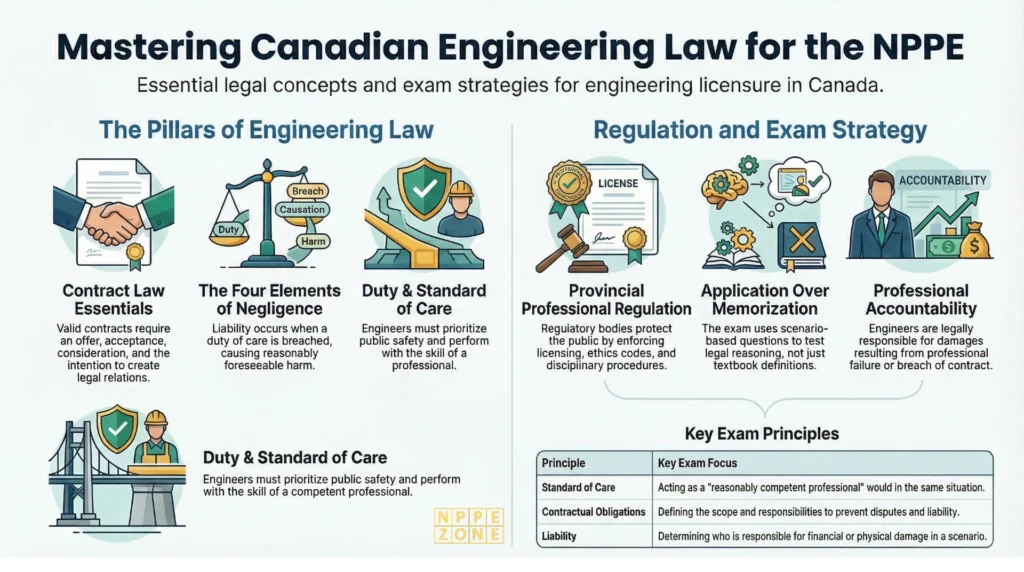
A valid contract generally includes:
- Offer
- Acceptance
- Consideration
- Intention to create legal relations
In engineering practice, contracts define scope, responsibilities, timelines, and compensation.
Why It Matters for NPPE
On the exam, you may be asked to identify:
- Whether a contract is valid
- What happens if terms are breached
- Who is responsible in a dispute
Negligence and Liability in Canadian Engineering Law NPPE
Understanding Negligence
Negligence and liability in Canadian engineering law NPPE is one of the most heavily tested topics. Negligence occurs when:
- A duty of care exists
- That duty is breached
- Harm or damage results
- The harm is reasonably foreseeable
Duty of Care in Engineering
Engineers must prioritize public safety. If an engineer’s actions (or inactions) lead to harm, they may be held liable.
Professional Regulation Laws for Engineers in Canada NPPE
Regulatory Framework
Professional regulation laws for engineers in Canada NPPE are designed to protect the public and maintain standards in the profession.
Canadian Engineering Law Examples for NPPE Exam Questions
Canadian engineering law examples for NPPE exam questions are typically scenario-based and require application of multiple concepts at once.
How Canadian Engineering Law Is Tested in NPPE Exam
Understanding how Canadian engineering law is tested in the NPPE exam is key to answering questions effectively.
NPPE Exam Canadian Law Summary for Engineers
Here’s a simplified NPPE exam Canadian law summary for engineers:
- Contract law governs agreements between parties
- Negligence involves failure to meet a duty of care
- Engineers must act with reasonable skill and professionalism
- Regulatory bodies enforce licensing and discipline
- Liability arises when harm results from professional failure
- Legal and ethical responsibilities often overlap in practice
Essential Canadian Legal Principles for NPPE Exam Success
To succeed on the NPPE, focus on these essential Canadian legal principles for NPPE exam success:
Connecting Canadian Engineering Law Concepts Across NPPE Topics
To fully understand Canadian engineering law for NPPE, it helps to see how different legal topics connect together rather than studying them in isolation. For example, contract law in Canadian engineering NPPE explained, often overlaps with professional obligations when disputes arise.
Similarly, negligence and liability in Canadian engineering law NPPE frequently appear in scenarios where an engineer’s decision may impact public safety. These situations require candidates to evaluate duty of care, standard of care, and whether professional regulation laws for engineers in Canada NPPE have been upheld.
By reviewing Canadian engineering law examples for NPPE exam questions, candidates can better understand how multiple legal principles are combined into a single scenario. This improves recognition of patterns in how Canadian engineering law is tested in NPPE exam questions.
Additional Study Tip
This approach makes Canadian engineering law topics for the NPPE exam explained more intuitively and easier to recall during the exam.
Final Thoughts
Canadian engineering law for NPPE is a core component of the NPPE exam, but it doesn’t have to be overwhelming. By focusing on key areas like contract law, negligence, and professional regulation, you can build a strong foundation.Once you understand how NPPE Canadian law concepts engineers need to know are used in real scenarios, you’ll be far more confident in your answers.