Quick Answer:
Most candidates should plan 4–6 weeks of focused preparation when deciding how long to study for the NPPE exam in Canada. This recommended study time allows engineers to review ethics, Canadian engineering law, contracts, and professional responsibility while practicing NPPE-style questions. Some candidates with prior knowledge may succeed within 2–3 weeks, while internationally trained engineers may benefit from 6–8 weeks or more to fully prepare.
Understanding how long to study for the NPPE exam also means understanding the scope of the exam itself. The National Professional Practice Examination evaluates an engineer’s knowledge of Canadian engineering ethics, professional responsibility, regulatory law, contracts, liability, and professional conduct. Because these topics are different from technical engineering subjects, creating a realistic NPPE exam preparation timeline and following a structured study plan is one of the most effective ways to prepare for the exam.
How Long to Study for the NPPE Exam
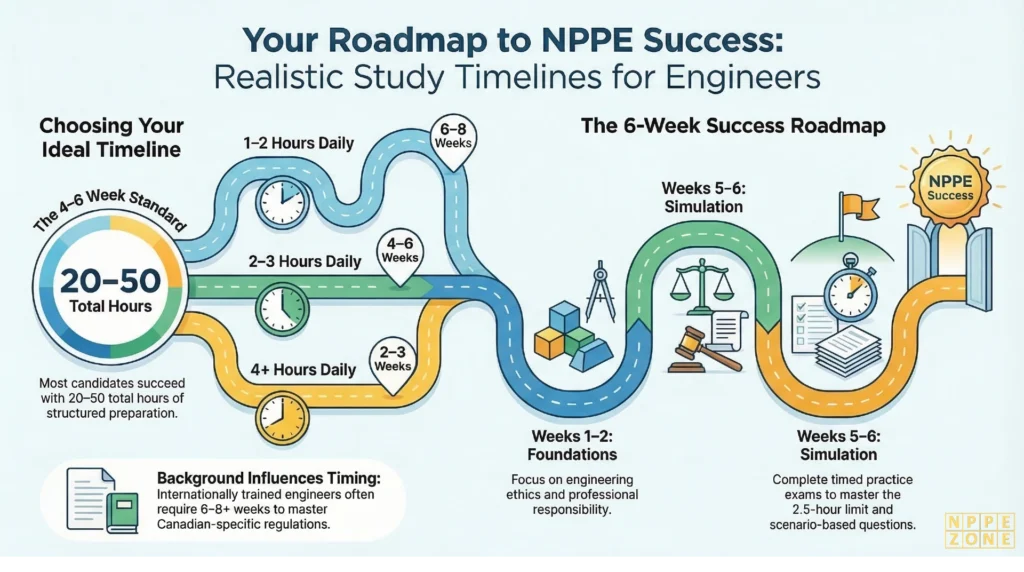
One of the most common questions engineering candidates ask is how long to study for the NPPE exam. While the exact timeline depends on your experience, background, and study schedule, most engineers preparing for the National Professional Practice Examination (NPPE) succeed with 4–6 weeks of structured preparation.
This preparation period typically includes reviewing engineering ethics, professional responsibility, Canadian engineering law, and practicing scenario-based questions. Following a clear study plan helps candidates manage their time effectively and approach exam day with confidence.
How Long to Study for the NPPE Exam: Tips from an Experienced Engineer
If you’re preparing for the National Professional Practice Examination (NPPE), you’re likely wondering:
“How long should you study for the NPPE exam in Canada?”Reaching this stage means you’re close to becoming a licensed Professional Engineer (P.Eng.), which is an exciting milestone. Unlike university engineering exams, the NPPE focuses on ethics, law, professional conduct, and regulatory responsibilities, not technical calculations. Because of this, the NPPE exam preparation timeline for Canadian engineers often requires a different study strategy than technical coursework. From mentoring many Engineers-in-Training (EITs) and internationally trained engineers, I’ve found that most candidates benefit from a structured preparation timeline of about 4–6 weeks. However, the average study time required to pass the NPPE exam can vary depending on several important factors.
Factors That Influence How Long You Should Study for the NPPE Exam
Prior Knowledge of Ethics and Engineering Law
Your background plays a major role in determining how much time engineers need to prepare for the NPPE exam.
Candidates who already studied:
- Engineering ethics
- Professional responsibility
- Canadian engineering law
May require less preparation time. However, internationally trained engineers or candidates unfamiliar with Canadian engineering regulations often require additional weeks to review the material thoroughly.Example from experience:
I once mentored an engineer trained overseas who had never studied Canadian engineering law. We spent nearly eight weeks reviewing ethics principles, regulatory requirements, and liability scenarios before he felt fully comfortable with the material.
Study Habits and Learning Style
Your personal study habits also affect the recommended study time for the NPPE exam. Some engineers prefer intensive short study sessions, while others learn better through gradual preparation.
For example:
- Independent self-study may take longer
- Structured prep courses can shorten study time
- Study groups often help clarify scenario questions
Following a clear NPPE exam study schedule for engineering graduates can make preparation much more efficient.
Familiarity with the NPPE Exam Format
Understanding the exam format significantly affects how many hours to study for the NPPE exam.
The NPPE exam is:
- Multiple-choice
- Scenario-based
- Focused on professional judgment
Candidates who practice realistic NPPE-style questions early in their preparation typically gain confidence faster and reduce study time.
Personal Time Availability
Your schedule also affects how many weeks to prepare for the NPPE exam.
Here is a general guideline:
| Study Time Available | Recommended Preparation Period |
| 1–2 hours per day | 6–8 weeks |
| 2–3 hours per day | 4–6 weeks |
| 4+ hours per day | 2–3 weeks |
Many working engineers study 5–8 hours per week, which naturally leads to a 4–6 week NPPE exam preparation timeline.
Recommended Study Time for the NPPE Exam
These preparation timelines represent the average study time required to pass the NPPE exam.
Short Study Period (2–3 Weeks)
This approach works best for candidates who:
- Recently studied ethics or professional responsibility
- Are familiar with Canadian engineering law
- Can dedicate several hours per day to studying
However, this timeline carries some risk if candidates rush through complex scenario questions.
Moderate Study Period (4–6 Weeks)
For most engineers, 4–6 weeks is the recommended study time for the NPPE exam.
This allows candidates to review all key topics:
- Engineering ethics
- Professional responsibility
- Canadian engineering law
- Contracts and liability
- Scenario-based decision making
Example:
One EIT I coached followed a six-week study schedule. By week four he was already performing well on practice exams and used the remaining time to strengthen weaker areas.
Longer Study Period (6–8 Weeks or More)
A longer NPPE exam preparation timeline for Canadian engineers can benefit candidates who:
- Are internationally trained
- Work full-time with limited study hours
- Want additional practice with scenario-based questions
Longer preparation reduces stress and improves retention.
Best Study Plan for the NPPE Exam in Canada
A structured preparation plan helps ensure you make the most of your study time.
A common NPPE exam study schedule for engineering graduates looks like this:
Week 1–2
Review engineering ethics and professional responsibility.
Week 3–4
Study Canadian engineering law, contracts, and liability.
Week 5–6
Take timed practice exams and review difficult concepts. This balanced approach is often considered the best study plan for the NPPE exam in Canada. For many candidates, following this type of structured NPPE exam study schedule for engineering graduates helps clarify exactly how many hours to study for the NPPE exam while ensuring all key topics—ethics, law, contracts, and professional practice—are reviewed thoroughly before test day.
Why Practice Exams Are Essential
Practice exams are critical for any effective NPPE exam preparation timeline.
They help you:
- Simulate real exam conditions
- Improve pacing and time management
- Identify knowledge gaps
Example:
One student delayed taking practice exams until the final week and struggled with pacing. After practicing under timed conditions, her confidence and performance improved dramatically.
Signs You Are Ready for the NPPE Exam
You are likely prepared when:
- You consistently score well on practice exams
- Scenario-based questions feel familiar
- Ethics and law concepts are clear
You can complete the exam within the 2.5-hour time limit
Why Knowing How Long to Study for the NPPE Exam Gives You an Advantage
Understanding how long to study for NPPE exam success helps transform preparation from guesswork into a clear strategy.
Improve Study Efficiency
Knowing the recommended study time for the NPPE exam helps you focus on high-value topics such as ethics, law, and professional responsibility.
Reduce Stress
A clear NPPE exam preparation timeline for Canadian engineers prevents last-minute cramming and improves confidence.
Maintain Work-Life Balance
Planning how many weeks to prepare for the NPPE exam allows working engineers to study consistently without burnout.
Strengthen Professional Thinking
Preparing for the NPPE develops professional judgment and ethical decision-making skills essential for licensed engineers.
How Much Time Engineers Need to Prepare for the NPPE Exam
Many candidates ask how much time engineers need to prepare for the NPPE exam because preparation styles vary widely. While the average study time required to pass the NPPE exam is typically four to six weeks, the total preparation time may range from about 20 to 50 hours depending on experience, familiarity with Canadian engineering law, and access to practice exams.
Engineers who follow a clear NPPE exam preparation timeline for Canadian engineers often find that spreading their study sessions across several weeks improves retention and confidence. Instead of cramming large amounts of material in a short period, a steady study schedule allows candidates to review ethics principles, analyze scenario-based questions, and practice professional judgment in realistic exam situations.
FAQ: How Long to Study for NPPE Exam
How long should you study for the NPPE exam in Canada?
Most candidates prepare for 4–6 weeks, depending on their background and available study time.
How many hours should I study for the NPPE exam?
Most engineers spend 20–40 hours studying spread across several weeks.
What is the average study time required to pass the NPPE exam?
The average study time required to pass the NPPE exam is typically 4–6 weeks of preparation.
What is the best study plan for the NPPE exam in Canada?
A strong study plan includes reviewing ethics and law concepts, practicing scenario-based questions, and taking full-length mock exams.
Final Thoughts
So, how long should you study for the NPPE exam?
For most candidates, 4–6 weeks of structured preparation is the ideal timeline. Some engineers may succeed with shorter preparation periods, while others benefit from 6–8 weeks or more depending on their background and schedule.
The key to success is not simply the number of hours you study, but how effectively you prepare.
Focus on:
- Engineering ethics
- Professional responsibility
- Canadian engineering law
- Scenario-based practice questions
- Timed practice exams
With the right preparation strategy, you’ll approach the NPPE confidently and take another important step toward becoming a licensed Professional Engineer in Canada.